
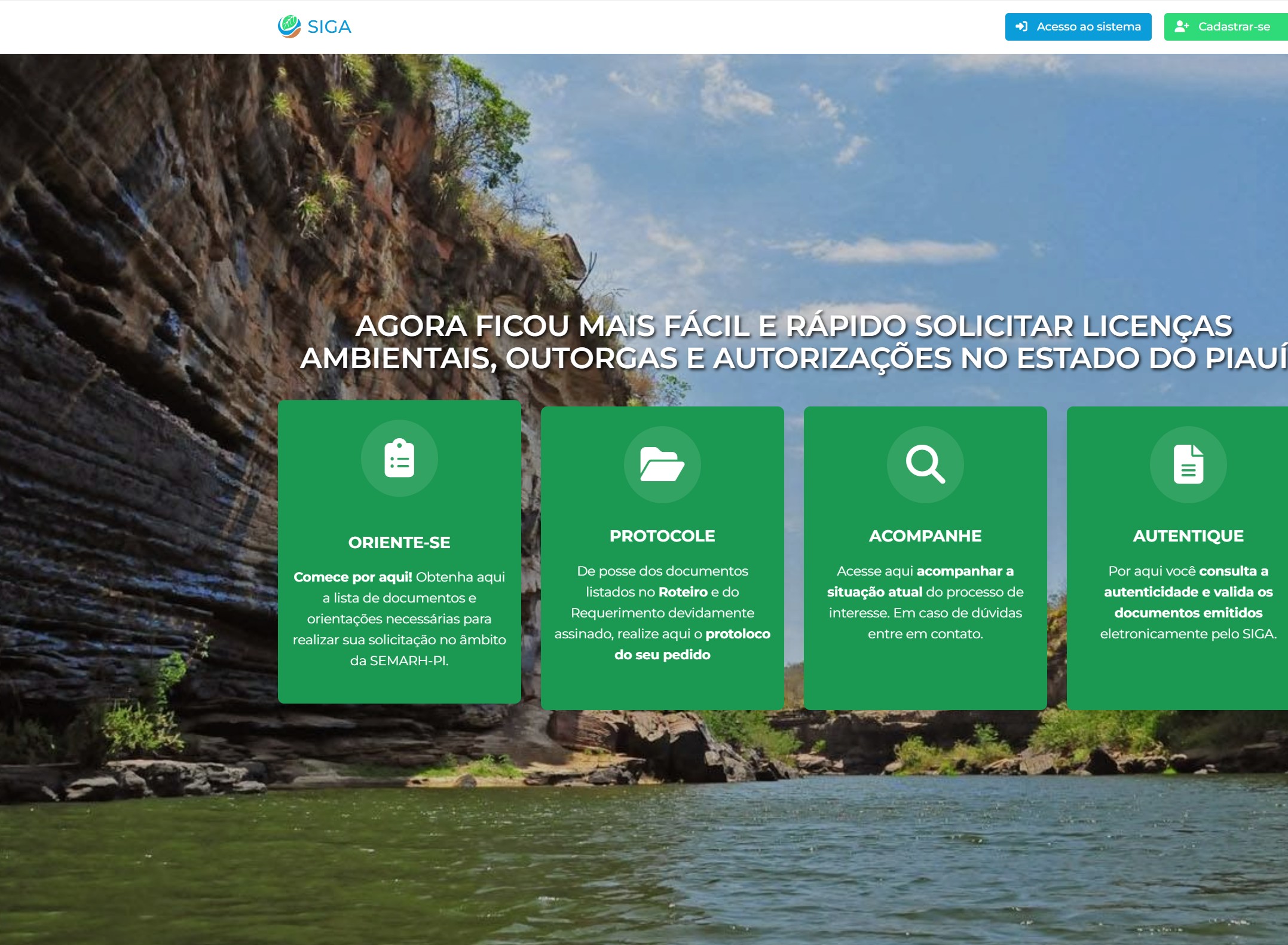
Water-use-right process roadmap before SEMARH/PI
Learn how to generate the automatic roadmap made available by SEMARH/PI for instructing the Water-Use Right process.
AcesseAssessment of receiving water bodies, effluent-discharge scenarios, water availability, environmental support capacity and impacts associated with the proposed discharge.
Click each topic to learn how we conduct the technical analysis.
Our preparation process includes technical visits, field inspection, recognition of hydrological features and description of the water dynamics of the studied region.
We assess the presence of ponds, outcrop zones, wetlands, thalwegs, drainage channels, streams, creeks, rivers, hydraulic devices, diffuse-contribution points and urban interferences capable of changing local hydrological behavior.
When necessary, we integrate modeling tools such as HEC-HMSandHEC-RAS, as well as in-house routines for determining reference flows, such as Q90andQ7,10, in addition to other relevant hydrological parameters.
The combination of field work, geoprocessing, modeling and technical interpretation allows us to build more consistent studies, with clear assumptions, traceable results and adequate basis for review by the competent agencies.
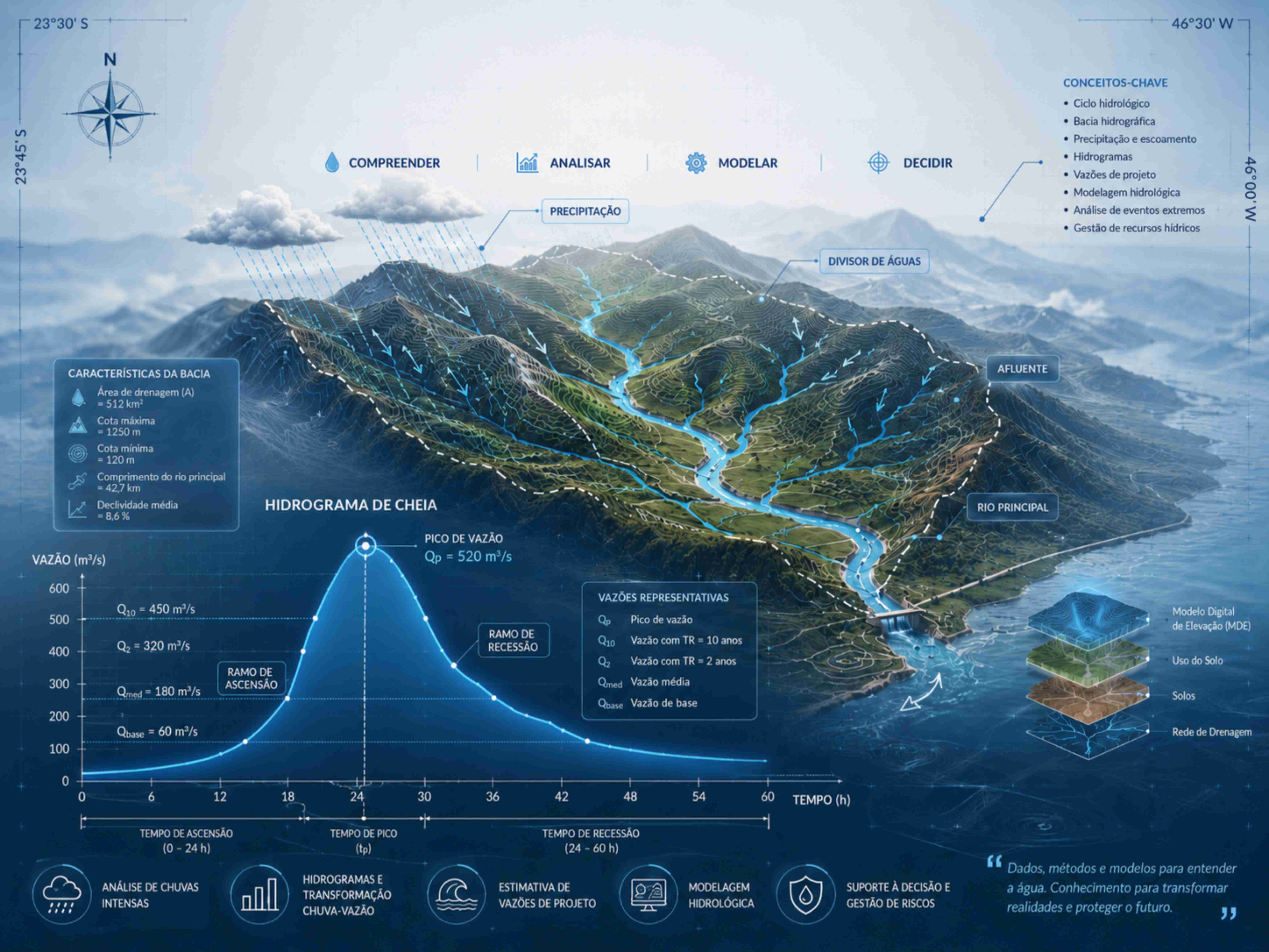
Water availability and self-purification capacity studies are complex technical documents. They require in-depth knowledge of regional hydrology, the dynamics of receiving water bodies and the environmental impacts associated with treated-effluent discharge.
Study quality depends on the correct interpretation of watershed behavior, reference flows, seasonality of the hydrological regime, discharge characteristics and environmental condition of the receiving water body.
Field campaigns are a critical stage. Recognition of water features, flow measurement, photographic records, identification of discharge points and collection of water-quality samples help reduce uncertainties and technically support the conclusions.
The absence of these methodologies, or their inadequate application, often generates supplementary requirements, technical questions and delays in process review by the competent agency.
For this reason, the methodological scope we develop is complete and coherent with current monitoring and hydrological-simulation techniques, ensuring a high-quality study approved without technical pending issues.
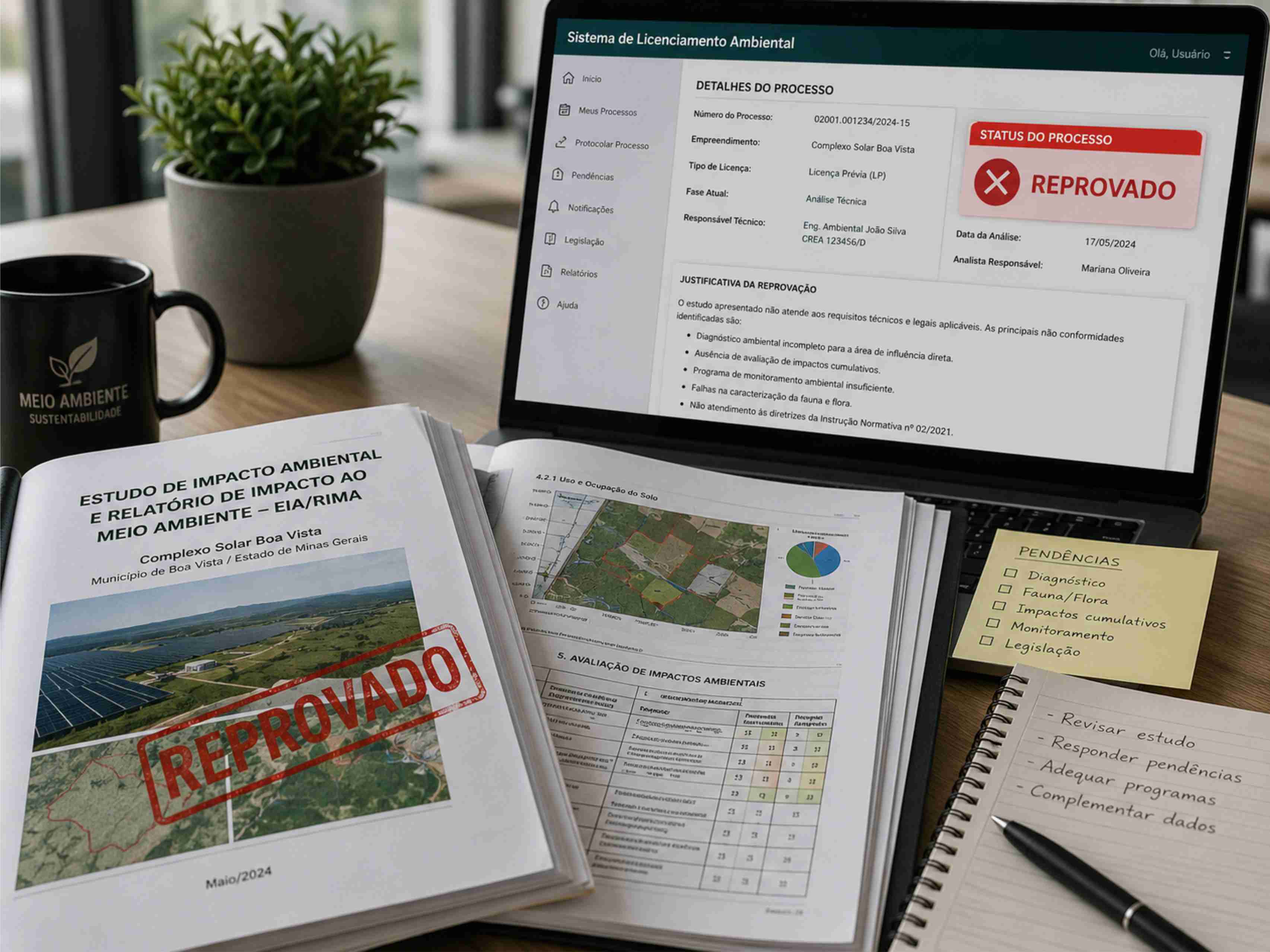
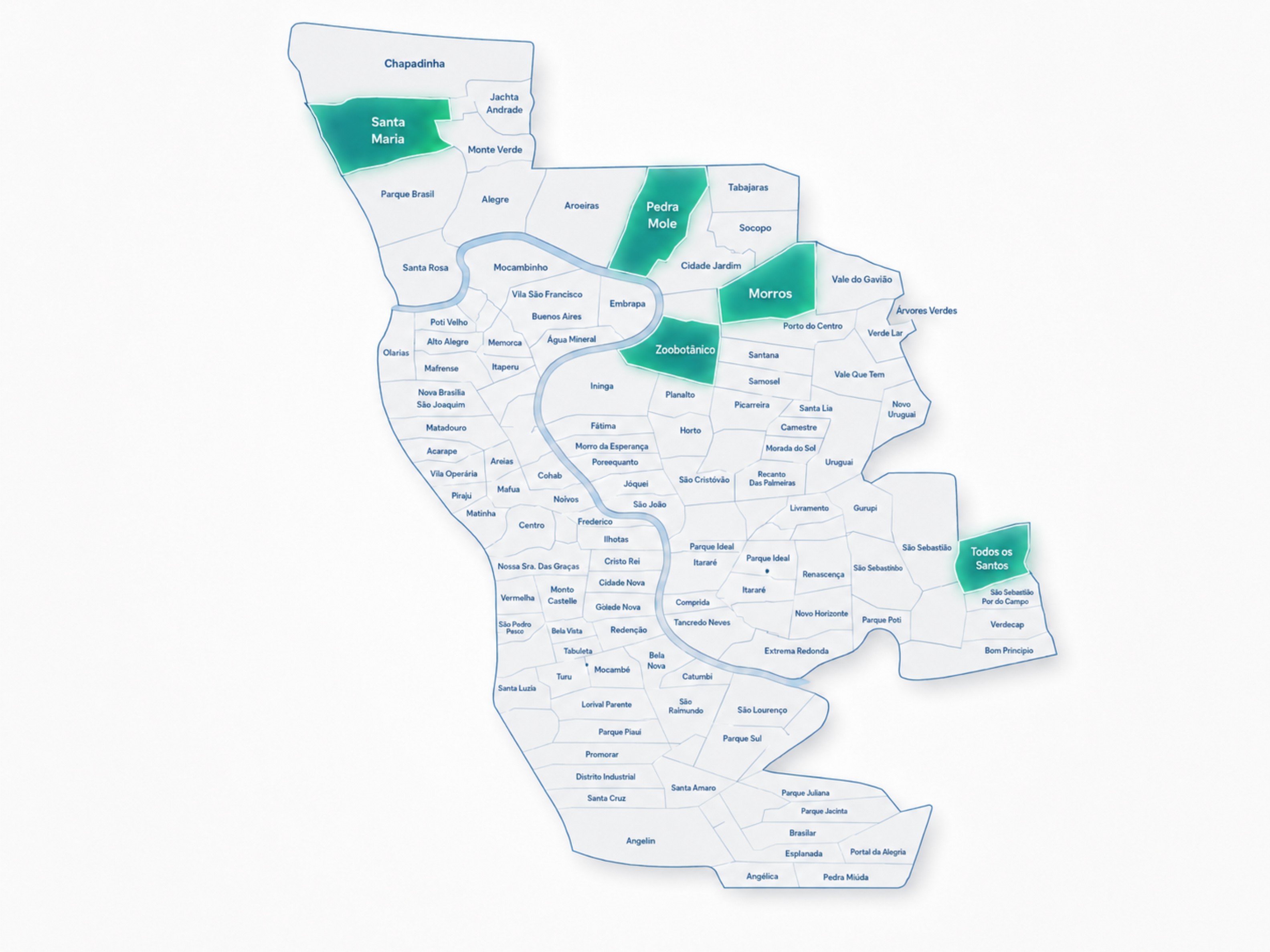
Our technical team, represented by Dr. Guilhermehas already participated in thepreparation and approval of water availability and self-purification capacity studies in Teresina/PI, in different urban, environmental and hydrological contexts.
These studies supported processes reviewed and approved by the State Secretariat for the Environment, with application of hydrological methodologies, field analyses, receiving-water assessment and integration with sanitary and environmental engineering projects.
This experience allows us to anticipate critical points, better organize technical data, structure consistent memoranda and reduce risks of pending issues during process review.
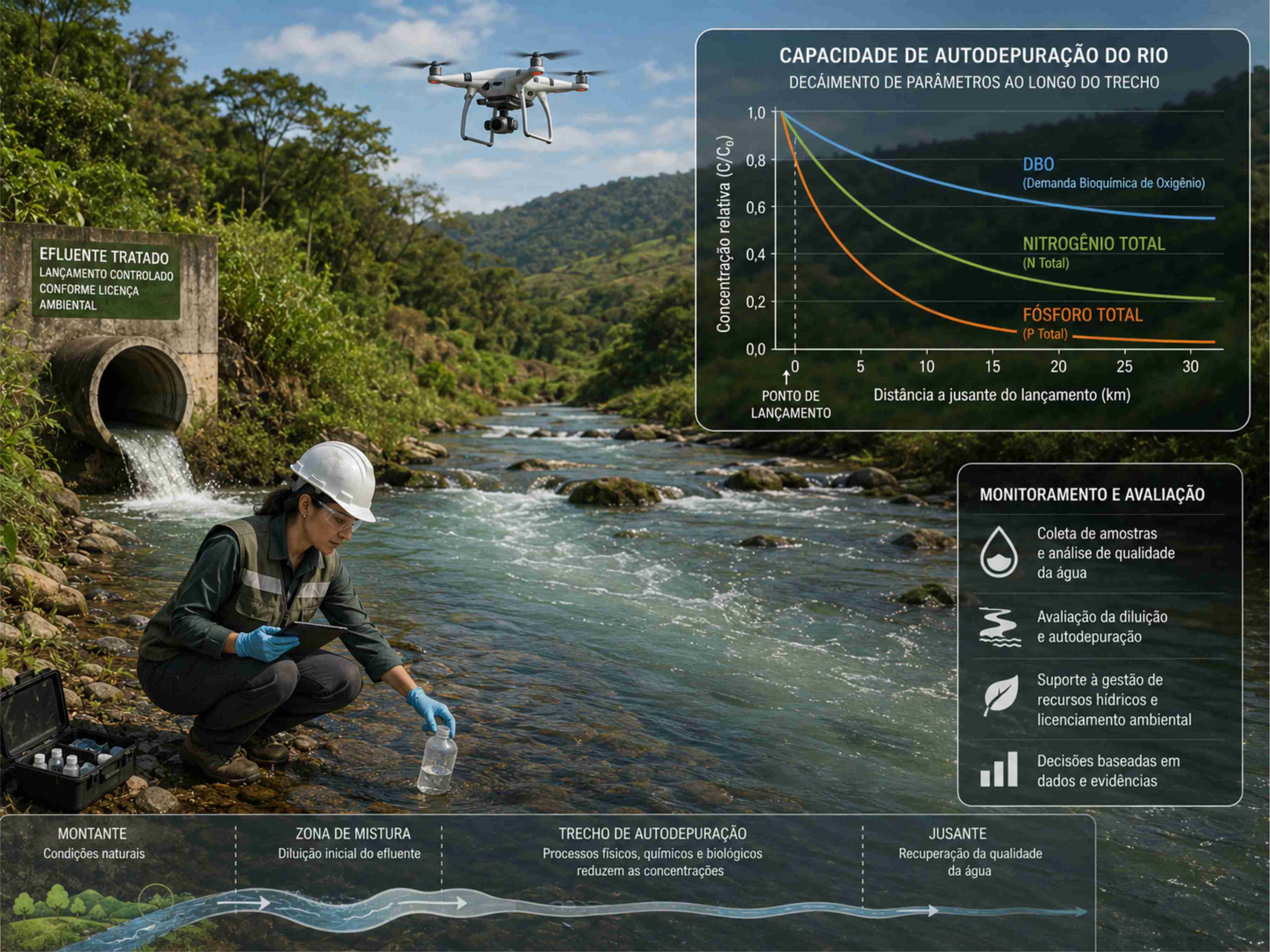
Modeling of self-purification capacity assesses how the receiving water body responds to treated-effluent discharge, considering hydrological conditions, discharge flow, effluent characteristics, existing water quality and natural processes of dilution, transport and organic-matter degradation.
This study must directly interface with the wastewater treatment plant project, sanitary-engineering assumptions, expected efficiency parameters and results of the hydrological study of the receiving water body.
Among the environmental impacts assessed are changes in dissolved oxygen concentration, biochemical oxygen demand, nutrients, organic matter, physicochemical parameters and environmental quality of the receiving reach.
Environmental management of the water body must incorporate monitoring and control techniques to verify the plant’s environmental performance, track discharge behavior and demonstrate that the receiving water body maintains support capacity compatible with the proposed scenario.
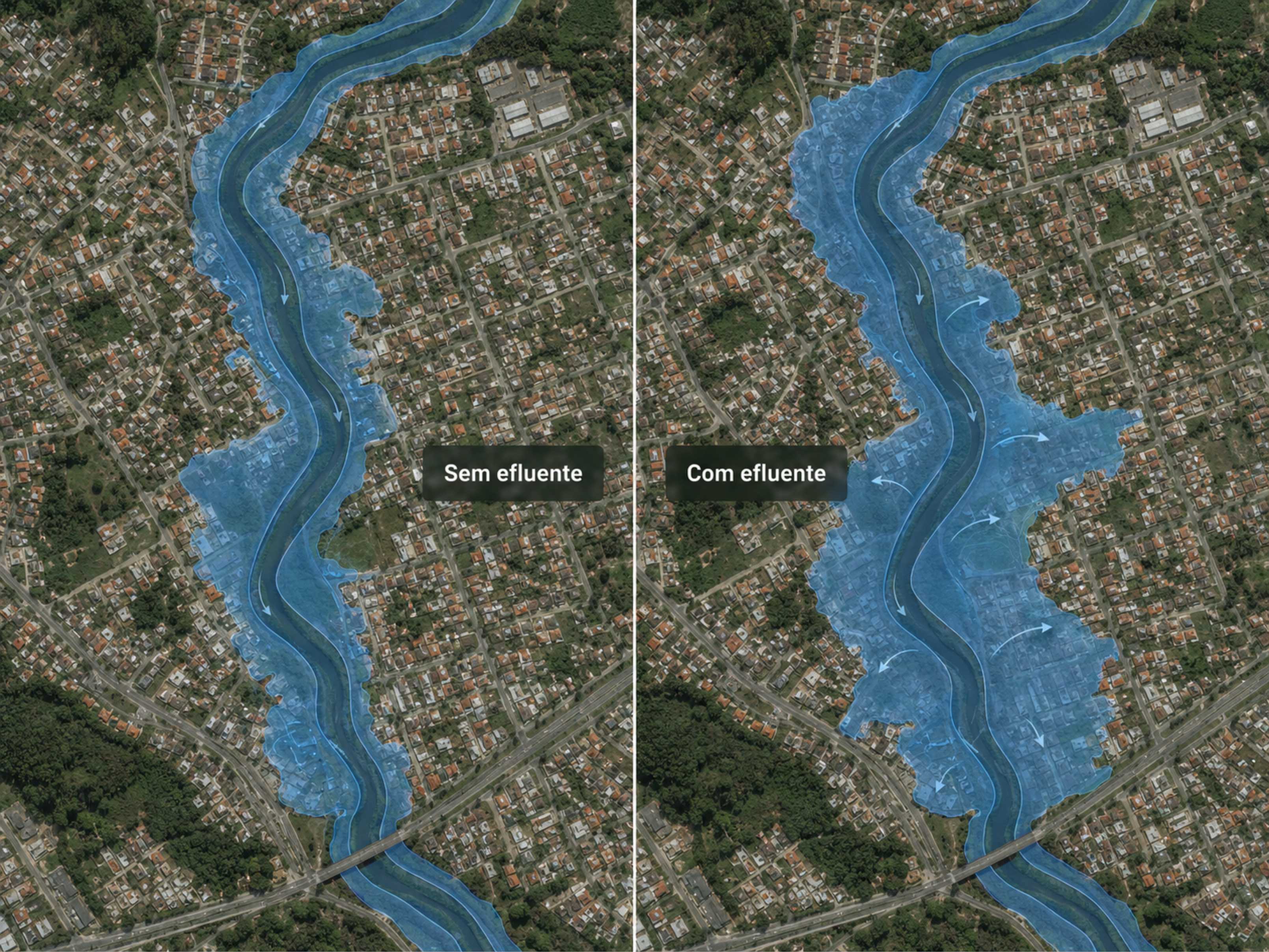
A variable often neglected in effluent-discharge studies is the relationship among discharged flow, the hydraulic regime of the receiving water body and occurrence of floods in the development’s influence region.
For this reason, we include a complementary analysis focused on floodplain simulation, assessing how the proposed discharge may change water levels, overflow points and areas subject to flooding.
This analysis enables technical verification of whether the discharge increases flood occurrence, especially in sensitive urban areas, regions with insufficient drainage, valley bottoms, occupied banks or reaches with a history of neighborhood conflicts.
The result helps demonstrate, on a technical basis, the impact of the discharge on this environmental variable and guides control measures, project adjustments or monitoring when necessary.
Explore topics related to water-use rights, hydrological studies and technical conduct of processes before competent agencies.
Learn how to generate the automatic roadmap made available by SEMARH/PI for instructing the Water-Use Right process.
Acesse
Learn how hydrological studies are prepared to support water availability, self-purification capacity, urban drainage, water-use-right and receiving-water assessments.
View service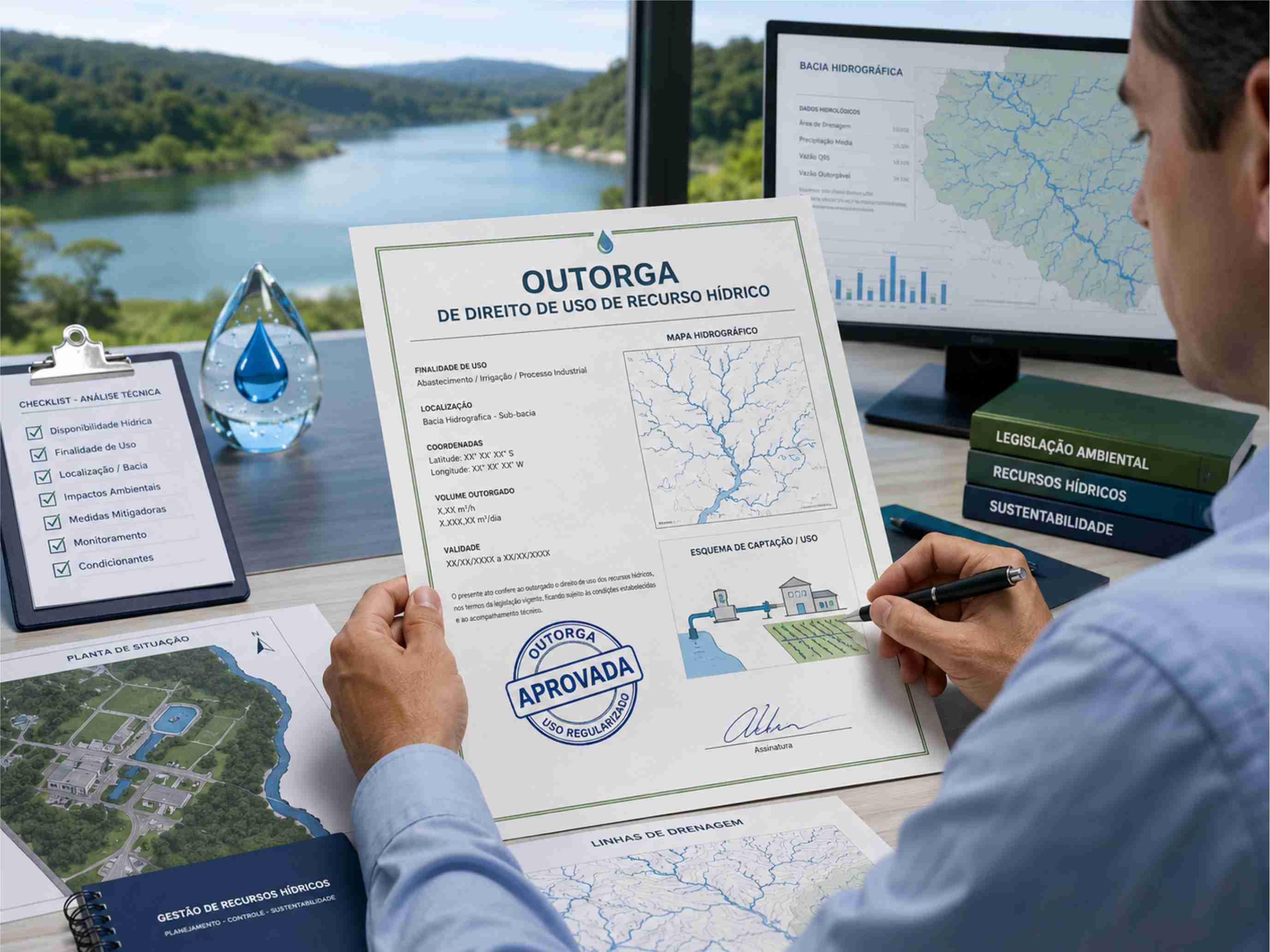
Learn about our specialized technical advisory and consulting. We take over, reorganize and conduct your process with technical strategy, adequate documentation and requirement follow-up.
Request advisoryRequest an initial assessment of your demand. We analyze the scope, location, receiving water body, available documents and the best technical strategy for conducting the study.
Request a quote