
PRAD - Degraded Area Recovery Plan
Field diagnosis, multidisciplinary planning, implementation and monitoring of indicators
How we will structure your PRAD
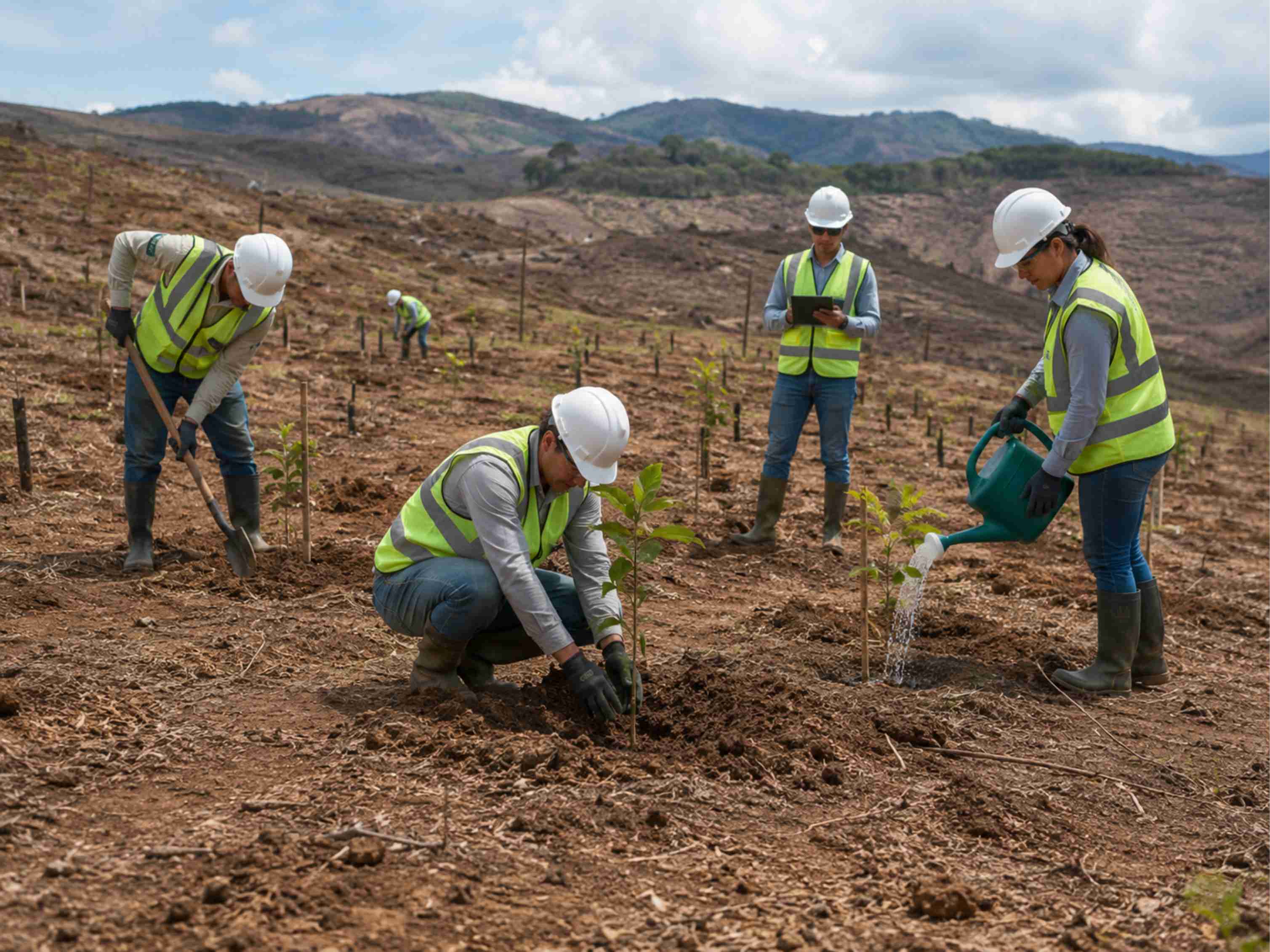
The PRAD preparation starts with understanding the current conditions of the area and defining a technical strategy compatible with the degree of degradation, previous and future land use, environmental-agency requirements and the environment’s natural regeneration capacity.
The plan may involve measures such as area isolation, erosion-process control, soil correction and preparation, restoration of native vegetation, seedling planting, direct seeding, assisted natural regeneration, invasive-species control, drainage devices, slope stabilization and periodic monitoring of results.
The methodology for preparing and implementing a PRAD involves four main stages:
Main solutions for degraded-area recovery
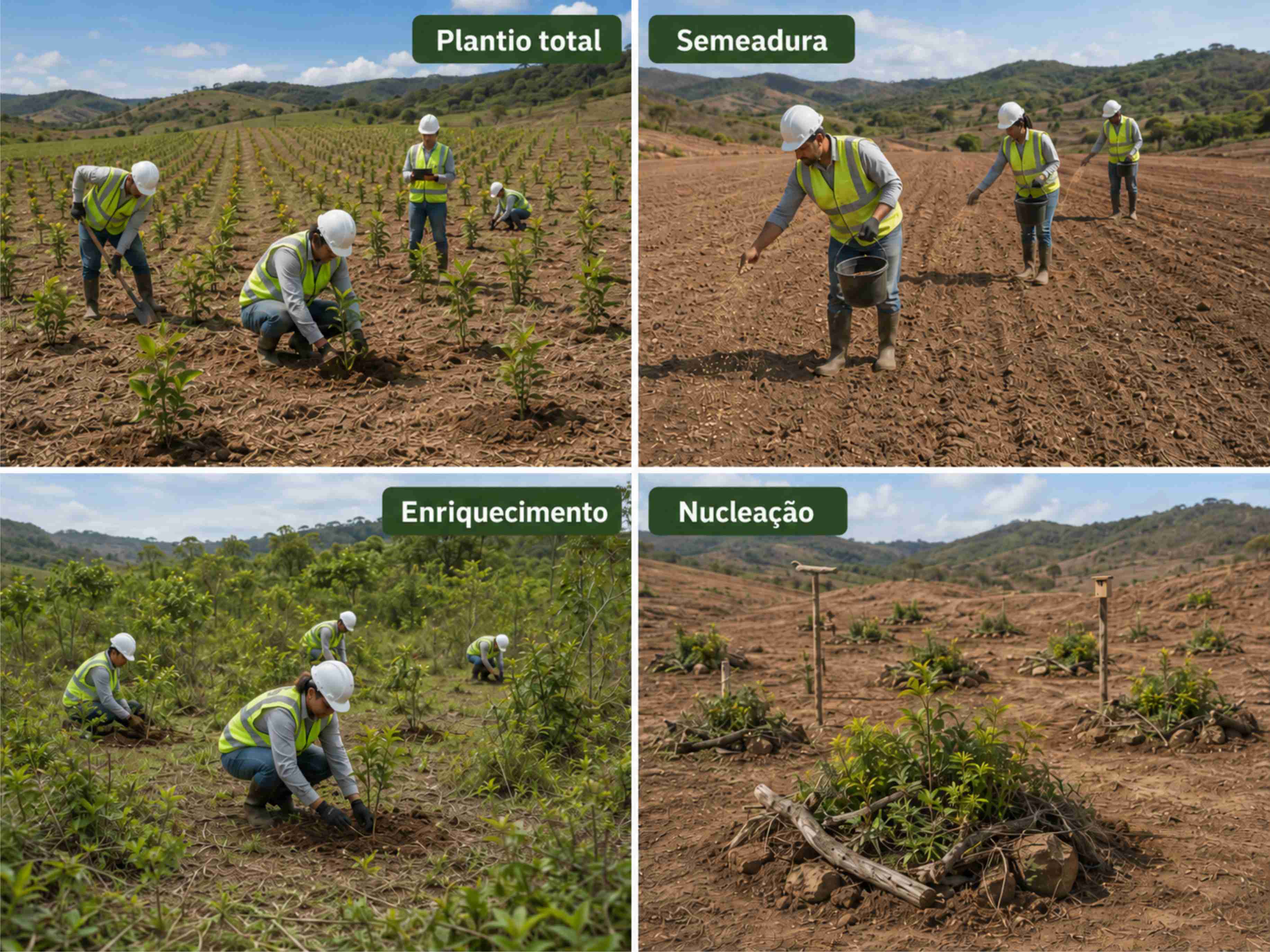
Degraded areas can be restored using different techniques of reforestation and ecological restoration. The choice depends on the degree of degradation, the presence or absence of natural regeneration, soil conditions, availability of seeds and seedlings, pressure from surrounding land use and the objectives defined in the PRAD.
In heavily degraded areas, more intensive techniques, such as full planting, are usually required. In areas with some natural recovery potential, lower-intervention solutions may be adopted, such as densification, enrichment, nucleation or assisted natural regeneration.
These are the main reforestation and ecological restoration techniques:
The definition of the technique must be technically justified in the PRAD, considering the environmental diagnosis of the area, recovery goals, monitoring indicators and operational feasibility of implementation and maintenance.
Need to restore a degraded area?
Send the initial information for demand assessment and proposal preparation.
Request a quote